
Hydraulic Data Plate Compliance for Fire Sprinkler Systems
Service: Hydraulic data plate surveys, fire sprinkler system evaluations, water supply testing, hydraulic calculations, and compliance documentation
Region: Gulf Coast, Mississippi, Florida Panhandle and Alabama
This article is for: Facility owners, property managers, contractors, building engineers, maintenance teams, and anyone responsible for fire sprinkler compliance
What Is a Hydraulic Data Plate?
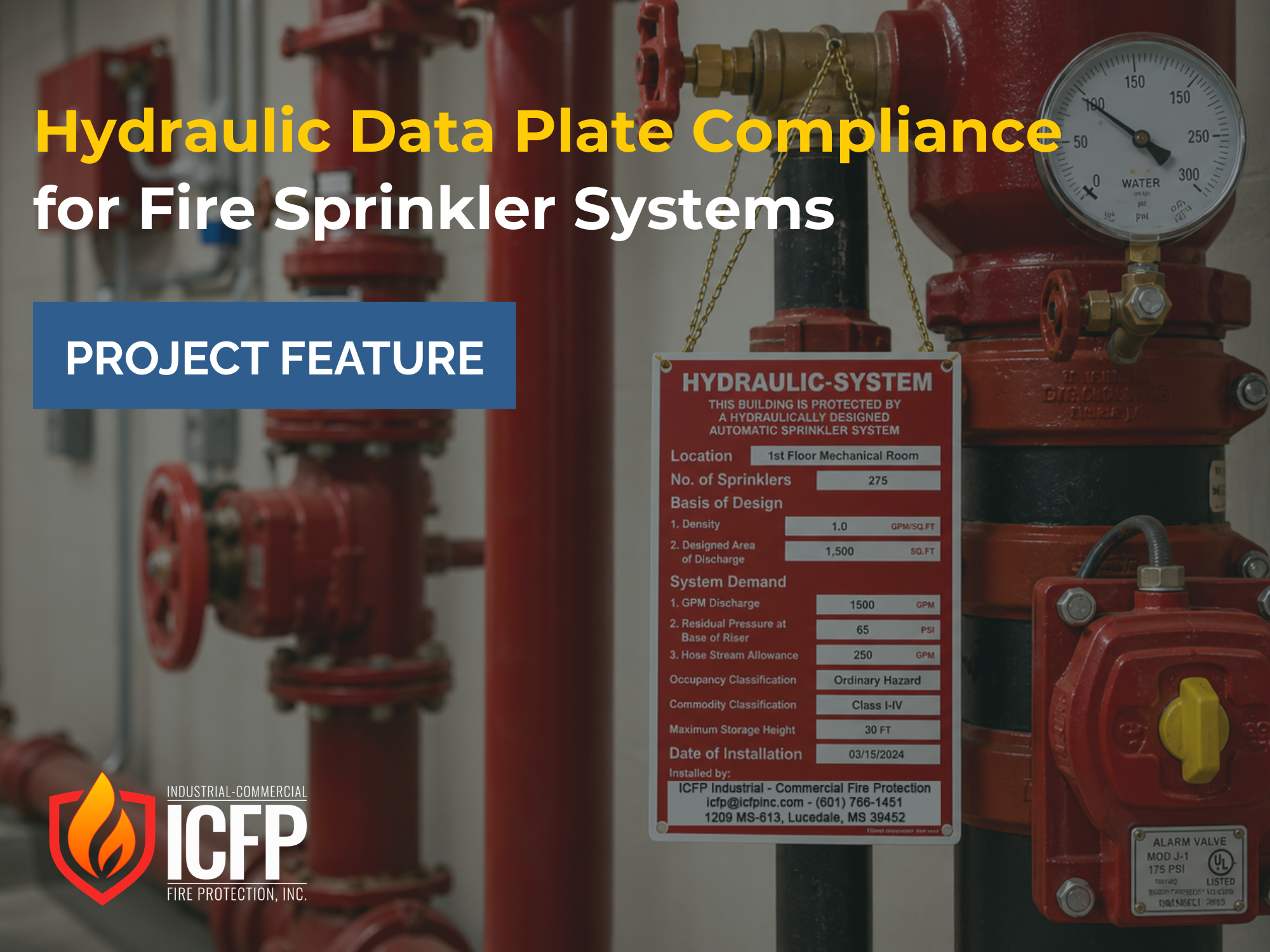
A hydraulic data plate is a required fire sprinkler system label installed at the system riser. It documents critical system information such as water supply data, hazard classification, system design criteria, and hydraulic calculation information.
When a hydraulic data plate is missing, inaccurate, outdated, or illegible, facility owners may face AHJ inspection deficiencies, failed inspections, re-inspections, project delays, and potential disruptions to facility operations.
Why Hydraulic Data Plates Matter for Fire Sprinkler Compliance
Fire marshals and Authorities Having Jurisdiction, also known as AHJs, are increasingly enforcing hydraulic data plate requirements tied to NFPA 13 and NFPA 25.
For many facilities, the issue is not the sprinkler system itself. The issue is that the documentation at the riser is incomplete or inaccurate.
As an experienced fire sprinkler contractor, ICFP routinely finds systems with missing or incorrect hydraulic data plates. These issues must be resolved with more than simply installing a new plate. An accurate hydraulic data plate requires a detailed review of the fire sprinkler system, water supply, building use, and applicable design criteria.
How ICFP Evaluates Fire Sprinkler Systems for Data Plate Compliance
ICFP provides a comprehensive, turnkey solution through a dedicated hydraulic data plate and system evaluation department. Our team works closely with facility owners, contractors, and AHJs to ensure each system is properly evaluated, documented, and brought into compliance.
ICFP performs and coordinates:
Water Supply Testing: Flow testing to determine available pressure and flow characteristics
System Identification: Verification of system type, including wet, dry, pre-action, or deluge systems
Piping System Analysis: Documentation of pipe sizes, materials, and routing
Sprinkler Head Evaluation: Identification of K-factors, temperature ratings, spacing, and discharge characteristics
Occupancy Hazard Classification: Determination of Light Hazard, Ordinary Hazard, or Extra Hazard classifications
Storage and Commodity Review: Evaluation of storage arrangements, storage heights, and commodity classifications when applicable
Building Assessment: Review of building use, layout, and fire protection design criteria
Once field data is collected, a licensed sprinkler system designer is involved in the review process. Computer-generated hydraulic calculations are performed when needed, and final system data is verified for alignment with current NFPA standards and AHJ expectations.
The Outcome for Facility Owners and Contractors
Through this service, ICFP helps clients resolve hydraulic data plate issues quickly and efficiently.
Facilities benefit from accurate sprinkler system documentation, improved inspection readiness, and a clearer understanding of system design and performance.
ICFP helps clients:
Achieve NFPA 13 and NFPA 25 compliance
Resolve AHJ inspection deficiencies
Ensure accurate documentation of system design and performance
Avoid costly delays, re-inspections, and operational interruptions
Give owners, facility teams, and inspectors confidence in system compliance
In many cases, addressing hydraulic data plate issues early can make the difference between a smooth inspection and a preventable compliance delay.
Fire Sprinkler Hydraulic Data Plate Services Across the Gulf Coast
The fire sprinkler system performed exactly as intended, extinguishing the fire and preventing what could have been a catastrophic loss.
Because the system activated quickly and was restored just as quickly, the property avoided major damage and operational downtime.
For the facility owner and manager, the event reinforced the importance of proper system installation, ongoing inspection, testing, and maintenance, and having a trusted fire protection service partner ready to respond when it matters most
In this case, preparation made the difference between a contained incident and a potential disaster.ICFP offers a full range of fire protection services to support hydraulic data plate compliance and fire sprinkler system evaluation, including:
Hydraulic data plate surveys and installation
Water supply flow testing and analysis
Fire sprinkler system evaluations and troubleshooting
Hydraulic calculations and system verification
Fire protection system design and consulting
AHJ coordination and compliance support
Our highly trained and responsive team serves clients throughout the Gulf Coast, Mississippi, Florida Panhandle and Alabama.
Frequently Asked Questions About Hydraulic Data Plates
What is a hydraulic data plate?
A hydraulic data plate is a fire sprinkler system label installed at the riser that documents key system design information, including water supply, hazard classification, and hydraulic calculation data.
Are hydraulic data plates required by NFPA?
Yes. NFPA 13 and NFPA 25 include requirements related to fire sprinkler system documentation, inspection, testing, maintenance, and system information that must be available for review.
Where is a hydraulic data plate installed?
A hydraulic data plate is typically installed at the fire sprinkler system riser where inspectors, facility teams, and service contractors can review the system information.
What happens if my hydraulic data plate is missing?
A missing hydraulic data plate can result in AHJ inspection deficiencies, failed inspections, re-inspections, project delays, or other compliance issues.
Can ICFP create a hydraulic data plate for an existing sprinkler system?
Yes. ICFP evaluates the existing sprinkler system, performs or coordinates water supply testing, reviews system information, completes hydraulic calculations when needed, and provides a compliant hydraulic data plate.
Who should request a hydraulic data plate evaluation?
Facility owners, property managers, contractors, building engineers, and maintenance teams should request an evaluation if the system plate is missing, outdated, illegible, or questioned by the AHJ.
Request a Hydraulic Data Plate Compliance Proposal
Hydraulic data plate requirements are being enforced more consistently by fire marshals and AHJs.
If your facility is missing a hydraulic data plate, has an outdated plate, or needs verification of existing system information, ICFP can help.
Our dedicated hydraulic data plate team will guide you through the entire process, from field evaluation and water supply testing to hydraulic calculations, final documentation, and compliant data plate installation.
Request a Hydraulic Data Plate Evaluation and make sure your fire sprinkler system is accurate, compliant, and properly documented.
