
A Gulf Coast Guide to Fire Protection System Installation
Service: Fire protection inspection, testing, and maintenance (ITM)
Systems: Fire sprinklers, fire alarms, fire pumps, fire water tanks, foam systems, extinguishers, and specialized suppression systems
Project Types: New construction, renovations, retrofits, expansions, and occupied facilities
Service Areas: Mississippi Gulf Coast, coastal Alabama, and the Florida Panhandle, including Gulfport, Biloxi, Pascagoula, Mobile, Gulf Shores, and Pensacola
This article is for: General contractors, owners, developers, facility managers, architects, engineers, and teams responsible for construction, safety, and compliance
Fire protection installation involves more than putting equipment in place. The system must follow the approved design, coordinate with other building systems, meet applicable requirements, pass inspection, and perform reliably after the building is occupied.
For Gulf Coast construction and renovation projects, installation may also involve demanding industrial environments, coastal conditions, active operations, complex water supplies, and coordination with local Authorities Having Jurisdiction, or AHJs.
Working with one experienced fire protection contractor can help keep the installation, testing, documentation, and final acceptance process aligned.
Quick answer: A complete fire protection installation includes project coordination, safe and code-compliant fieldwork, coordination with other trades, system testing, inspection support, and final documentation. ICFP installs fire sprinklers, alarms, pumps, tanks, foam systems, and other suppression systems for new construction and existing facilities across the Gulf Coast.
Why Does Fire Protection Installation Require Gulf Coast Experience?
Facilities from Gulfport, Biloxi, and Pascagoula across Mobile and Gulf Shores to Pensacola include a wide range of commercial, industrial, maritime, aviation, government, and residential properties.
Each environment presents different challenges. A shipyard or refinery may require large fire pumps, dedicated water supplies, or specialized suppression systems. A coastal condominium may require carefully phased work around residents. An aviation hangar may involve foam suppression and technically complex acceptance testing.
Regional experience helps a fire protection contractor understand these facility types, communicate with local project teams, and plan work around site operations and AHJ requirements.
The goal is not simply to complete the installation. It is to provide a system that is installed correctly, passes inspection, and remains practical to inspect, test, and maintain over time.
What Should a Complete Fire Protection Installation Include?
Project planning and coordination. The contractor reviews the schedule, approved drawings, specifications, facility conditions, and project responsibilities before installation begins.
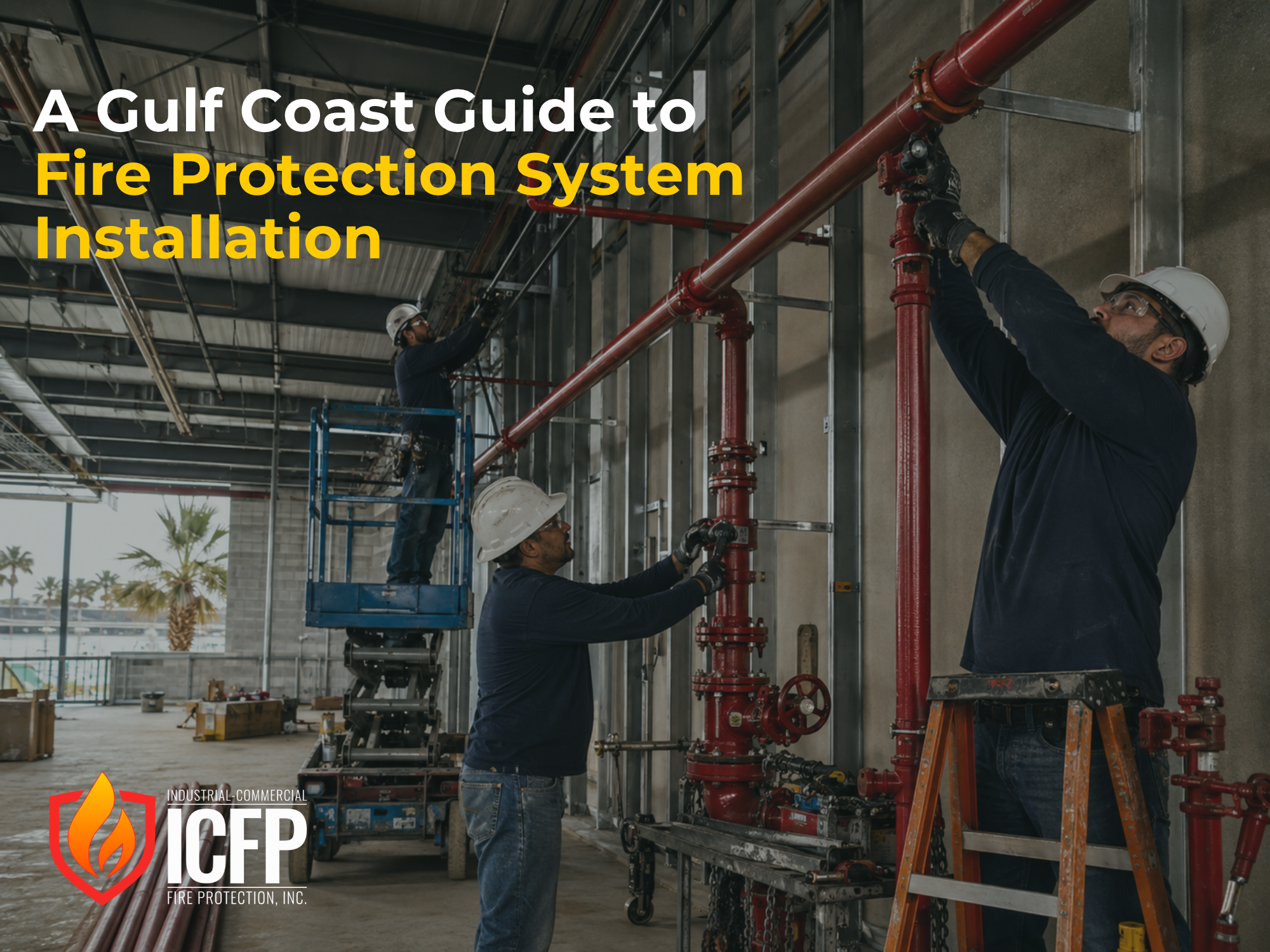
Safe, professional installation. Trained crews install the equipment according to the approved design and applicable requirements while maintaining a clean, organized jobsite.
Coordination with other trades. Fire protection piping, alarms, pumps, and related equipment must share space with structural, mechanical, electrical, plumbing, and process systems.
Testing and acceptance support. The installed system is tested and prepared for required inspections and AHJ walkthroughs.
Documentation and handoff. As-built drawings, operation and maintenance manuals, testing records, and system information are organized for the owner or facility team.
Strong installation work carries the detail developed during design through the entire project, from rough-in to final sign-off.
Which Fire Protection Systems Can ICFP Install?
ICFP provides coordinated installation for fire sprinkler systems, fire alarm systems, fire pumps, fire water tanks, fire extinguishers, foam systems, and specialized fire suppression systems.
These systems may be installed under one coordinated scope or as part of a larger construction or renovation project.
ICFP also provides fire protection design and ongoing inspection, testing, and maintenance. This gives customers access to support from initial planning and installation through long-term system care.
How Does Coordinated Installation Help Keep Construction Moving?
Fire protection installation affects and is affected by many other parts of a construction project. Poor coordination can result in system conflicts, rework, inspection problems, and schedule delays.
ICFP begins by reviewing the project scope, schedule, drawings, and responsibilities with the general contractor or owner. Crews then coordinate with other trades throughout installation to identify conflicts and resolve field concerns.
Safety oversight and quality checks remain part of the process. ICFP team members have the authority to stop work if a condition is unsafe or does not meet project expectations.
After installation, ICFP supports hydrostatic testing, system acceptance testing, inspection preparation, AHJ walkthroughs, and final closeout.
The result is a cleaner transition from installation to inspection and from construction to building operations.
How Does Installation Differ for New Construction and Existing Facilities?
New construction installation typically involves complete sprinkler, alarm, pump, tank, or suppression systems. The fire protection contractor works closely with the general contractor and other trades to follow the construction schedule and prepare the system for final acceptance.
Retrofit and renovation work may involve demolition, connections to existing equipment, occupancy changes, system upgrades, phased installation, and updated drawings.
Occupied facilities require additional planning. Work may need to be completed in phases to limit downtime, maintain facility operations, and coordinate required system impairments.
ICFP can plan installation around active industrial plants, healthcare facilities, schools, warehouses, commercial buildings, residential properties, and other occupied environments.
Why Are Fire Pumps and Fire Water Tanks Important Installation Specialties?
Fire pumps and fire water tanks provide the water supply needed for many large or technically demanding fire protection systems.
These installations require careful attention to the approved design, equipment arrangement, piping, controls, testing requirements, and future maintenance access.
ICFP has extensive experience designing, installing, inspecting, testing, and maintaining fire pump and water tank systems. These capabilities are especially relevant for industrial plants, refineries, shipyards, aviation facilities, warehouses, government properties, and other facilities with significant fire protection demands.
ICFP's focus on technically complex work helps carry design intent into the field and produce an installation that is organized, accessible, and ready for inspection.
Which Gulf Coast Facilities Need Professional Fire Protection Installation?
Professional installation supports any facility that requires new or modified fire protection systems. ICFP's regional capabilities are especially relevant for:
These facilities include refineries and industrial plants; shipyards and maritime facilities; aviation hangars and terminals; government and military properties; healthcare and education facilities; warehouses and logistics centers; commercial buildings; and coastal condominiums and high-rise residential properties.
The appropriate installation approach depends on the facility's occupancy, hazards, water supply, operations, construction schedule, and applicable requirements.
Where Does ICFP Provide Fire Protection Installation Services?
Based in Lucedale, Mississippi, ICFP provides fire protection installation services across the Mississippi Gulf Coast, coastal Alabama, and the Florida Panhandle.
The service area extends from Pensacola, Florida, through Mobile and the Alabama Gulf Coast, across Pascagoula, Ocean Springs, Biloxi, Gulfport, and surrounding Mississippi communities. ICFP also serves projects west to the Mississippi-Louisiana state line and north to Jackson, Mississippi.
Facilities outside these cities or farther inland can contact ICFP to confirm installation availability.
Frequently Asked Questions About Gulf Coast Fire Protection Installation
Does ICFP install systems designed by other companies?
Yes. ICFP can install systems based on approved designs prepared by other qualified professionals. The team reviews the available plans and coordinates installation with the general contractor, owner, design team, and other trades.
Can ICFP handle complex fire pump and water tank installations?
Yes. Fire pump and fire water tank systems are ICFP specialties. The company has experience with technically complex industrial, aviation, government, commercial, and special hazard projects.
Can installation be completed in an occupied facility?
Yes. ICFP can phase retrofit and renovation work to help minimize downtime and operational disruption. The specific plan depends on the facility, existing systems, occupancy, and project requirements.
Does ICFP support final testing and inspection?
Yes. ICFP supports required system testing, inspection preparation, AHJ walkthroughs, documentation, and final system handoff.
Can ICFP coordinate more than one fire protection system?
Yes. ICFP can coordinate fire sprinklers, alarms, pumps, tanks, extinguishers, foam systems, and specialized suppression systems under one installation scope.
Can ICFP continue servicing the system after installation?
Yes. ICFP provides ongoing fire protection inspection, testing, maintenance, corrective service, and system support after installation.
Build Your Gulf Coast Fire Protection System With Confidence
Whether you are planning a new industrial facility, renovating an occupied property, installing a fire pump and water tank, or coordinating several fire protection systems, ICFP provides the experience needed to move the project from planning through final acceptance.
ICFP serves general contractors, owners, developers, and facility teams throughout Mississippi, Alabama, and the Florida Panhandle.
Request a fire protection installation quote or contact ICFP at icfp@icfpinc.com or (601) 766-1451 to discuss your project, location, systems, and schedule.
